




As First Nations across Canada move to reclaim their inherent right to govern their child and family services through An Act Respecting First Nations, Inuit and Metis children, youth and families a common question is “where do we start?”.
“In our every deliberation, we must consider the impact of our decisions on the next seven generations.” – Seventh generation principal, ancient Haudenosaunee philosophy
Since Canada’s federation child and family services have been primarily governed at the provincial and territorial level.
Despite provincial and territorial law, Indigenous communities have been caring for their children, youth, and families well before European contact, and have always had intricate cultural laws and ways of being while asserting community wellbeing.
In 2019 Bill C-92 was introduced in the House of Commons, passing later that year, and coming into force in 2020. And in 2024 An Act Respecting First Nations, Inuit and Metis children, youth and families was passed in the Supreme Court, confirming it constitutional in its entirety.
What does this mean? The Act at its essence recognizes that Indigenous communities have an inherent right to jurisdiction over their Indigenous child and family services, with a goal of keeping Indigenous children closely integrated in the families, communities, and cultures associated to their Indigenous ancestry. The Act also sets national principles to ensure the best interests of the child, cultural continuity, and ‘substantive equality’ in regard to child, youth and family well-being.
The Caring for First Nations Children Society, now the Indigenous Perspectives Society has, for the past three decades, worked collaboratively with First Nations, and Indigenous communities to deliver culturally grounded education to social workers who work within Indigenous child and family service agencies across British Columbia. We have provided historical and cultural context and understanding to social workers stepping into Indigenous communities who may have been otherwise unaware to the adverse history of both the church and state inflicted child and family “care”.
As Bill C-92 was brought to the House, the Indigenous Perspectives Society launched the training An Introduction to Indigenous Child and Family Services (Bill C-92) which introduced participants to the bill.

Getting Familiar and Understanding International, National, and Provincial Laws Regarding Indigenous Child and Family Services
As Bill C-92 is now passed and the law is living and breathing, the Indigenous Perspectives Society has heavily revised the curriculum and has renamed it Walking Together Toward Indigenous Jurisdiction: Interpreting the Act. This three-day course is intended for community members in decision making roles to:
- Understand the intent of the United Nations Declaration on the Rights of Indigenous Peoples and the Declaration on the Rights of Indigenous Peoples Act.
- Apply the framework and content of An Act Respecting First Nations, Inuit and Metis children youth and families.
- Define how An Act Respecting First Nations, Inuit and Metis children youth and families interacts with the Child, Family and Community Service Act and Indigenous laws.
- Apply the national standards set out in An Act Respecting First Nations, Inuit and Metis children youth and families
- Practice, work, and support in accordance with Indigenous child and family service jurisdiction.
Walking Together Toward Indigenous Jurisdiction: Interpreting the Act is received best in its entirety in-person, either at our facilitation centre just outside of Victoria, BC, or in your community. To connect with our Client Services Coordinator to further discuss your needs, please reach out.
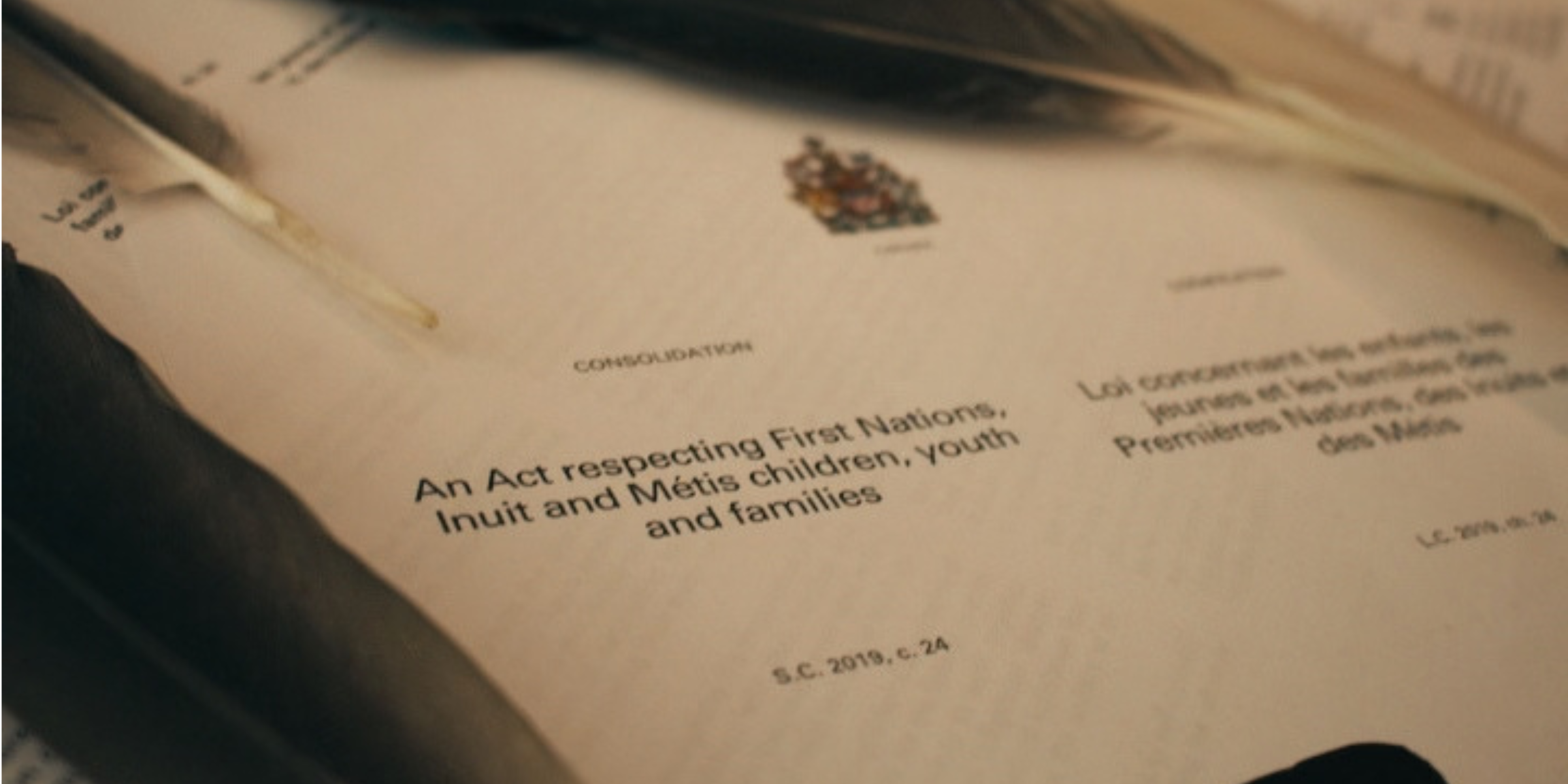
Planning a Future for Reclaiming Indigenous Child and Family Services
If you’ve read this far and are already understand the context of An Act Respecting First Nations, Inuit and Metis children youth and families, the United Nations Declaration on the Rights of Indigenous Peoples, and the Declaration on the Rights of Indigenous Peoples Act and are looking for practical steps to move forward to develop jurisdiction for your Nation, keep reading.
The Indigenous Perspectives Society is gearing up to launch a second part to the above-mentioned training. Walking Together Toward Indigenous Jurisdiction: Planning for Development is a two-day training that builds on the learning from Walking Together Towards Jurisdiction: Interpreting the Act. In Part 1, participants explored the history that led to the development of An Act Respecting First Nations, Inuit and Métis children, youth and families, the purpose and intentions of the legislation, and the broader context of Indigenous jurisdiction over child and family services.
Part 2 shifts the focus from understanding the Federal Act to exploring what Indigenous jurisdiction can look like in practice.
Participants will examine how Indigenous laws, values, governance, and community priorities can guide decision-making while considering the practical realities of implementing jurisdiction within their own Nations and communities.
Throughout the training, participants will explore how Indigenous, federal, and provincial or territorial laws interact, recognizing that each has a role in supporting children, youth, and families.
Through discussion, reflection, videos, activities, and shared learning, participants will consider how these legal frameworks intersect while exploring opportunities, responsibilities, and practical considerations for exercising Indigenous jurisdiction.
Recognizing that every Nation’s journey is unique, this training does not promote a single approach to exercising jurisdiction. Instead, it creates space for participants to learn from one another, reflect on their own community contexts, and explore how Indigenous jurisdiction can be exercised in ways that reflect their Nation’s laws, teachings, governance, values, and vision for children, youth, and families.
This training is available starting in 2027, please contact our Client Services Coordinator if you’d like to discuss how you can participate.
Implementing and Regaining Governance over Indigenous Child and Family Services
Now, if you’re still reading, and have already fully or partially realized laws for Indigenous child and family services and would benefit from a collaborator, the Indigenous Perspectives Society is ready to co-develop a curriculum and deliver and/or co-deliver alongside your communities’ educators in a program we’re calling Indigenous Jurisdiction Implementing Child and Family Practices.
Indigenous Jurisdiction Implementing Child and Family Practices combines the teachings of your communities’ laws, the provincial Act, and the federal standards. After development and training delivery to the staff of your Indigenous child and family service agency your Nation/community will be positioned to lead jurisdiction over your Indigenous child and family services. To connect to further discuss what this could look like in your community, please reach out to our Client Services Coordinator.

Top-Up Training for both Indigenous Governed & Provincially Delegated Indigenous Child and Family Service Agencies
With over thirty years of experience the Indigenous Perspectives Society is well positioned to provide capacity building to front-line service providers within Indigenous child and family service agencies. These trainings are available through our program Capacity Building for Indigenous Child & Family Practice offered a la carte or bundled topics which include:
- Colonization
- Connection & Support
- Family Care Homes
- Family Violence
- Hope, Help & Healing: Suicide Prevention
- Investigative Interviewing
- Lifelong Connections
- Resilience in Children & Youth
- Resilient Practitioners
- Residential Schools
- Substance Misuse
- Trauma Informed Practice
- Truth & Reconciliation
- Working Together
To discuss a suggested bundle package, availability, and suitability, please contact our Client Services Coordinator.